
Have you ever walked into a kitchen and felt instantly captivated by the elegant swirl of marble kitchen countertops? Are you wondering how some homeowners keep their marble looking absolutely stunning year after year? Perhaps you’re considering marble for your Australian home but feel a bit nervous about the upkeep?
You’re not alone in your curiosity. Marble has graced the finest homes for centuries, and there’s something undeniably luxurious about this natural stone. From the classic white Carrara to the dramatic Calcutta, marble brings a warmth and sophistication that few other materials can match. Yet, many Australians hesitate to take the plunge because they’ve heard marble is “high maintenance” or “too delicate” for everyday kitchen use.
In this guide, we’ll explore five practical tips that will help you maintain your marble kitchen countertops and keep them looking gorgeous for decades. You’ll discover why marble behaves differently from other stones, learn the daily habits that protect your investment, and understand when it’s time to call in the professionals. Whether you’ve just installed marble benchtops or you’re caring for surfaces that have been in your family for years, these insights will give you the confidence to enjoy your marble without constant worry.
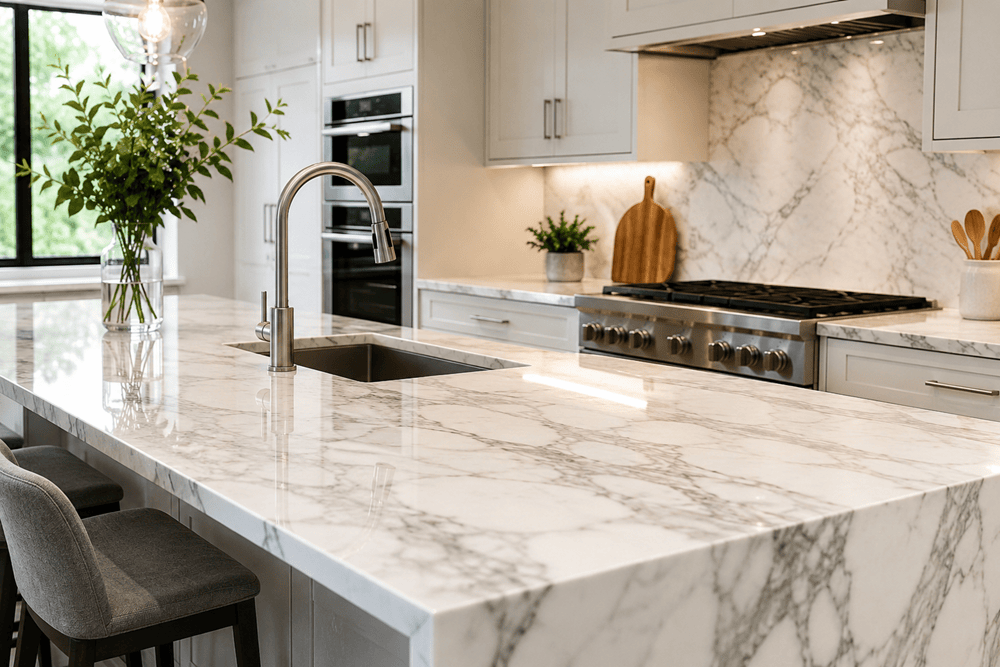
Understanding Your Marble: The Foundation of Proper Care
What Makes Marble Different from Other Natural Stones?
Marble isn’t just another pretty stone it’s a metamorphic rock formed from limestone under intense heat and pressure. This process creates those beautiful veins and patterns we all love, but it also gives marble some unique characteristics you need to understand.
Unlike granite, which is an igneous rock with a much harder surface, marble is relatively soft and porous. It scores around 3 on the Mohs hardness scale, while granite sits at 6 or 7. This means marble scratches more easily and absorbs liquids faster than its tougher cousins.
Common Types of Marble Used in Australian Kitchens
Australian homeowners typically choose from several popular varieties. Carrara marble, with its soft grey veining, remains a favourite for its understated elegance. Calacatta marble features bolder, more dramatic patterns and commands a premium price. Statuario marble offers a whiter base with striking grey veins, perfect for making a statement.
Why Is Marble So Porous and What Does That Mean for Maintenance?
That gorgeous crystalline structure that makes marble sparkle also makes it absorbent. Think of marble like a sponge with tiny, invisible holes. Spills don’t just sit on the surface they can penetrate and leave lasting marks if you’re not careful. This porosity is precisely why proper sealing and quick clean-ups matter so much.
Daily Cleaning Habits That Protect Your Investment
The Right Way to Wipe Down Marble Surfaces
Keeping your marble clean doesn’t require anything fancy. A soft microfibre cloth dampened with warm water does the job beautifully for everyday wiping. The key is being gentle and consistent rather than aggressive and sporadic.
After preparing meals, give your countertops a quick wipe to remove crumbs and residue. Then dry the surface with a clean cloth. This simple habit prevents water spots and stops small messes from becoming permanent problems.
Which Cleaning Products Are Safe for Marble Kitchen Countertops?
Stick to pH-neutral cleaners specifically designed for natural stone. Many supermarkets and hardware stores across Australia stock these products. You can also make a gentle solution using a few drops of mild dish soap in warm water.
What Household Products Should You Never Use on Marble?
Here’s where things get serious. Avoid these at all costs:
– Vinegar and citrus-based cleaners
– Bleach and ammonia products
– Abrasive scrubbing pads
– Generic bathroom or kitchen sprays
– Anything with acids or harsh chemicals
These products can etch the surface, leaving dull spots that are tricky to repair.

Sealing Your Marble: The Non-Negotiable Step
How Often Should You Seal Marble kitchen Countertops?
Most stone care experts recommend sealing marble kitchen countertops every six to twelve months. However, this depends on how heavily you use your kitchen and what type of sealer you’ve applied. High-traffic kitchens might need sealing more frequently.
How Do You Know When Your Marble Needs Resealing?
Here’s a simple test: drop a few water droplets onto your countertop and wait fifteen minutes. If the water beads up, your seal is still working well. If it soaks in and darkens the stone, it’s time to reseal.
Step-by-Step Guide to Sealing Marble at Home
Sealing marble yourself is absolutely achievable. Start by cleaning the surface thoroughly and letting it dry completely this usually takes about 24 hours. Apply the impregnating sealer evenly using a soft cloth, working in small sections. Allow it to penetrate for the time specified on the product, then buff away any excess.
Professional Sealing vs DIY: What Works Best?
For routine maintenance, DIY sealing works perfectly well. However, if your marble has existing damage or you want the absolute best protection, professional stone specialists have access to industrial-grade sealers and expertise that’s hard to match at home.
Preventing Stains, Etching, and Damage
Can You Remove Stains from Marble Kitchen Countertops?
Yes, but prevention is always easier than cure. For organic stains like coffee or wine, a poultice made from baking soda and water often works wonders. Apply it to the stain, cover with plastic wrap, and leave overnight. For oil-based stains, try a poultice with baking soda and acetone.
How to Deal with Common Kitchen Spills Immediately
Speed is everything. When something spills, blot it immediately don’t wipe, as this spreads the liquid. Then clean the area with your pH-neutral cleaner. Red wine, tomato sauce, and citrus juices are particularly problematic, so keep a cloth handy when working with these ingredients.
Preventing Heat Damage and Scratches
Always use trivets under hot pots and pans. While marble can handle some heat, sudden temperature changes can cause thermal shock and cracking. Similarly, use cutting boards religiously. Those gorgeous marble surfaces scratch easily, and knife marks will accumulate over time.
Does Lemon Juice Really Ruin Marble?
Absolutely. Lemon juice, along with any acidic substance, causes etching a chemical reaction that dulls the polished surface. Even a splash of orange juice left for a few minutes can leave a mark. If you’re squeezing citrus, do it well away from your marble benchtops.
Long-Term Maintenance and Professional Care
When Should You Call a Professional Stone Restoration Specialist?
If your marble has deep scratches, significant etching, or stubborn stains that won’t budge, it’s time to call the experts. Professional restoration can bring even badly damaged marble back to life through diamond grinding, honing, and polishing techniques.
Polishing and Honing: Restoring Your Marble’s Natural Lustre
Over time, even well-maintained marble loses some of its shine. Professional polishing restores that mirror-like finish, while honing creates a softer, matte appearance that some homeowners prefer. Both processes remove a thin layer of stone to reveal fresh, unblemished marble beneath.
Is Marble High Maintenance Compared to Other Benchtop Materials?
Let’s be honest marble does require more attention than engineered stone or laminate. However, many Australians find the extra effort worthwhile for the unmatched beauty and character that marble provides. With good habits, maintenance becomes second nature rather than a burden.
Enjoying Your Marble Kitchen Countertops for Decades to Come
Caring for marble kitchen countertops isn’t as daunting as it might first appear. With the right daily habits, regular sealing, and a bit of common sense around acidic substances and heat, your marble will maintain its stunning appearance for years to come.
The key points to remember are simple: clean gently with pH-neutral products, seal regularly, act quickly on spills, and don’t hesitate to seek professional help when needed. These practices transform marble maintenance from a worry into a straightforward routine.
Your marble kitchen countertops represent both a financial investment and a commitment to timeless style in your Australian home. By following these five tips, you’re not just protecting stone you’re preserving a surface that will become part of your family’s daily life and memories. So go ahead, pour that glass of wine in your beautiful kitchen, just keep a cloth nearby and enjoy every moment in your stunning space.


