
Have you ever found yourself staring at a challenging construction site, wondering how on earth you’ll lift heavy materials across uneven ground? Or perhaps you’re managing a project in a remote location where traditional cranes simply can’t reach? Maybe you’re just trying to figure out the most cost-effective way to get serious lifting power without breaking the bank?
If any of these scenarios sound familiar, you’re in the right place. All terrain crane hire offers a flexible, powerful solution for projects that demand versatility and reliability. These remarkable machines combine the best features of truck cranes and rough terrain cranes, making them ideal for Australian conditions where worksites can range from urban construction zones to outback mining operations.
In this guide, we’ll walk you through everything you need to know about hiring an all terrain crane. You’ll discover how the hiring process works, what factors affect pricing, and how to choose the right crane size for your specific project. We’ll also cover site preparation requirements, safety considerations, and help you decide whether hiring makes more sense than buying. By the end, you’ll have all the knowledge you need to make an informed decision and get your project moving smoothly.
What Is an All Terrain Crane and Why Choose One?
An all terrain crane is exactly what the name suggests—a mobile crane designed to operate on virtually any surface. These impressive machines feature multiple axles, all-wheel drive, and all-wheel steering capabilities. This combination allows them to travel on public roads at highway speeds while also navigating rough, unprepared ground at worksites.
What sets all terrain cranes apart from other crane types is their incredible adaptability. Unlike crawler cranes that require transport on low loaders, all terrain cranes drive themselves to site. And unlike standard truck cranes, they don’t struggle when the ground gets a bit rough. This makes them particularly valuable across Australia, where projects often involve challenging terrain and significant travel distances between sites.
The lifting capacities of all terrain cranes range from around 30 tonnes to over 1,200 tonnes for the largest models. This broad range means there’s usually an all terrain crane suited to almost any lifting task, from installing air conditioning units on commercial buildings to erecting wind turbines in remote locations.
How Does All Terrain Crane Hire Work?
The Hiring Process Explained
Getting started with crane hire is more straightforward than you might expect. Typically, you’ll begin by contacting a crane hire company with details about your project. They’ll want to know what you’re lifting, how heavy it is, how high and how far the load needs to travel, and what the site conditions are like.
From there, the hire company will recommend an appropriate crane and provide a quote. Once you agree to terms, they’ll schedule the crane for your project dates. On the day, the crane arrives with a qualified operator who handles all the lifting operations safely and efficiently.
Wet Hire vs Dry Hire: Which Option Is Right for You?
When hiring an all terrain crane, you’ll typically choose between wet hire and dry hire arrangements. Wet hire includes the crane plus a fully qualified operator—this is by far the most common option and generally the safest choice. The operator knows the machine inside out and holds all necessary licences and certifications.
Dry hire means you get the crane only, without an operator. This option suits companies that employ their own licensed crane operators. However, dry hire comes with greater responsibility. You’ll need to guarantee your operator is properly qualified and that you have appropriate insurance coverage.
What’s Included in a Typical Hire Agreement?
A standard wet hire agreement usually covers the crane, operator, fuel, and basic rigging equipment. The hire company typically handles maintenance, insurance for the crane itself, and compliance documentation. However, you’ll generally be responsible for the load being lifted, site preparation, and any permits required for your specific project.
When Do You Need an All Terrain Crane?
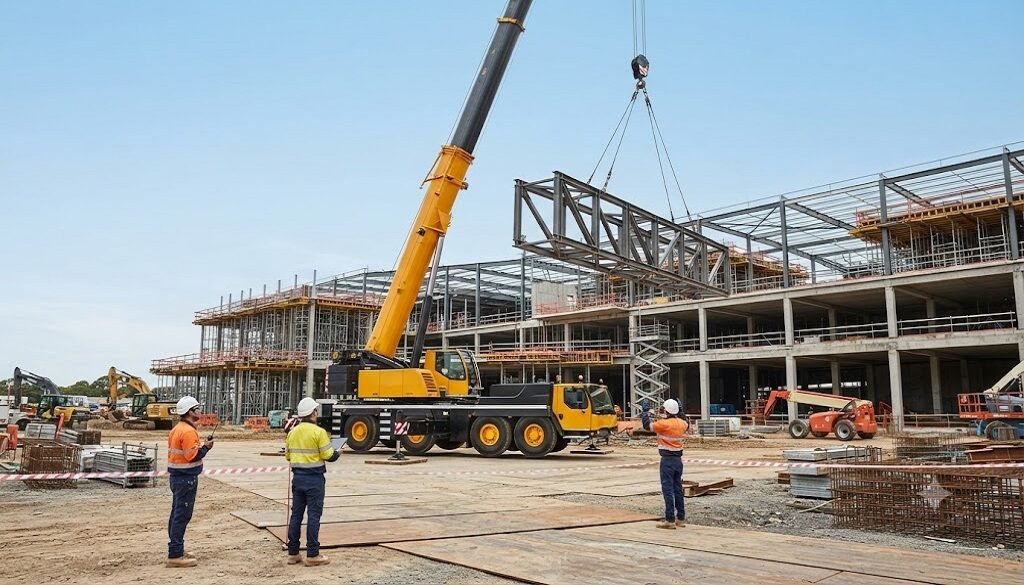
All terrain cranes prove invaluable across numerous industries and applications throughout Australia. In construction and infrastructure, they’re used for everything from lifting structural steel and precast concrete panels to positioning mechanical plant equipment on building rooftops.
The mining and resources sector relies heavily on all terrain cranes for equipment installation and maintenance in remote locations. Their ability to travel to site under their own power and then operate on unprepared ground makes them perfect for mine sites, oil and gas facilities, and wind farm installations.
Emergency and recovery operations also frequently call on all terrain cranes. When accidents occur or infrastructure fails, these versatile machines can quickly mobilise to lift vehicles, clear debris, or support emergency repairs—even in difficult-to-access locations.
How Much Does It Cost to Hire an All Terrain Crane?
Factors That Affect Crane Hire Pricing
Several elements influence what you’ll pay for all terrain crane hire. The crane’s lifting capacity is the primary factor—larger cranes with greater lifting power cost more. The duration of hire matters too, as do travel distances to your site and any special requirements like night work or weekend operations.
Daily vs Weekly Hire Rates
Most crane hire companies offer both daily and weekly rates. Daily rates suit short jobs lasting a few hours to a full day. If your project spans several days, weekly rates typically offer better value per day. For extended projects, monthly arrangements can reduce costs even further.
As a rough guide, smaller all terrain cranes might start from $2,000-$3,000 per day, while larger machines can run to $10,000 or more daily. Always get detailed quotes from multiple providers to compare accurately.
Hidden Costs to Watch Out For
Be aware of potential additional charges that might not appear in the initial quote. These can include mobilisation and demobilisation fees, travel time charges, overtime rates for extended hours, and waiting time if the crane can’t work due to site issues. Asking upfront about these extras helps avoid surprises on your final invoice.
What Size Crane Do I Need for My Project?
Understanding Crane Lifting Capacities
Crane lifting capacity isn’t as simple as picking a crane rated for your load weight. Capacity decreases significantly as the boom extends further from the crane’s centre. A crane rated at 100 tonnes might only lift 10 tonnes at its maximum reach. This relationship between weight and reach is critical for crane selection.
Matching Crane Size to Job Requirements
To choose the right crane, you’ll need to know your heaviest lift weight, the required lifting radius (how far from the crane the load must travel), and the lift height needed. The crane hire company will use this information along with the crane’s load charts to determine the appropriate machine.
How to Calculate Load and Reach Requirements
Start by identifying your heaviest single item. Add the weight of any rigging equipment like slings, shackles, and spreader beams. Then measure the horizontal distance from where the crane can safely position to where the load must be placed. Don’t forget to account for obstacles that might require additional reach or height.
Choosing the Right Crane Hire Company
Questions to Ask Before Signing
Before committing to a hire agreement, ask about the crane’s age and maintenance history. Enquire about backup plans if the crane breaks down. Check whether the quote includes all costs or if extras apply. Find out about the operator’s experience with similar projects.
Certifications and Licences to Look For
Reputable crane hire companies hold appropriate licences and certifications. In Australia, look for companies registered with relevant state work health and safety authorities. Operators should hold current high-risk work licences specific to the crane class they’re operating. Insurance certificates should be readily available upon request.
Why Experience and Reputation Matter
An experienced crane hire company brings more than just equipment. They offer practical problem-solving skills, accurate advice on crane selection, and smooth coordination on site. Check online reviews, ask for references, and consider how long the company has been operating in your area.
Site Preparation and Safety Requirements
Your site needs adequate preparation before an all terrain crane arrives. Ground conditions must support the crane’s weight—both during travel and when operating with outriggers extended. The hire company can advise on specific ground bearing requirements for your selected crane.
In Australia, crane operations fall under strict work health and safety regulations. A safe work method statement is typically required, along with appropriate exclusion zones during lifting operations. Someone must take responsibility for site assessments, usually coordinated between your project team and the crane hire company.
Benefits of Hiring vs Buying an All Terrain Crane
Hiring an all terrain crane offers significant advantages over ownership for most businesses. The financial flexibility is substantial—you avoid the massive capital outlay of purchasing, plus ongoing costs for maintenance, storage, registration, and insurance when the crane sits idle.
Through hiring, you gain access to the latest equipment without the depreciation hit. Crane technology continues advancing, and hire fleets are regularly updated with newer, more efficient machines. Plus, you can select exactly the right size crane for each project rather than making do with what you own.
The reduced hassle factor shouldn’t be underestimated either. Maintenance, repairs, compliance inspections, and operator training all become the hire company’s responsibility rather than yours.
Final Thoughts: Getting the Most from Your Crane Hire
All terrain crane hire provides a practical, flexible solution for lifting challenges across countless Australian projects. From construction sites to remote mining operations, these versatile machines deliver serious lifting power wherever it’s needed. For projects requiring reliable lifting equipment in the city, All Terrain Crane Hire in Sydney can be a practical option to consider.
The key to successful crane hire lies in clear communication with your chosen provider. Share accurate information about your lifting requirements, site conditions, and project timeline. This ensures you get the right crane at the right price, with no unpleasant surprises along the way.
Whether you’re planning your first crane hire or looking to improve your approach, remember that reputable hire companies want your project to succeed. They’re valuable partners who can offer advice, solve problems, and help you complete your work safely and efficiently. So, reach out, ask questions, and get your next lifting project off the ground with confidence.


